

A practical framework for balancing product quality, inspection cost, and delivery risk when sourcing from China.
Before your products leave a factory in China, how do you know the mass-produced goods actually match what you approved?
Not the supplier’s showroom sample.
Not photos sent through WhatsApp.
Not a single unit prepared for a video call.
The real production batch.
At Jonble, we have seen a bulk order of baseball caps produced with a 1.5-inch gap between the embroidered logo and the brim — the approved sample specified 1.25 inches. In another case, a buyer watched a printing machine run correctly during a video call, only to find after delivery that it had been tested on China’s 220V supply while the buyer’s facility required 380V. The problem was eventually fixed, but it pushed the buyer’s production schedule back by two months.
Neither situation was bad luck. Both were quality risks that went unchecked at the stage where they could still have been caught and corrected.
Effective quality control is not a single inspection performed after everything has been manufactured. It is a sequence of controls placed where specific risks can still be detected and corrected at a reasonable cost.
That is why no single inspection method works for every order. The right plan depends on whether the supplier is new or established, whether the product is standard or newly developed, the complexity of manufacturing, order quantity and value, the cost of a defect reaching the end customer, and the available budget and schedule.
This guide covers the main types of product inspection used in China-based supply chains, explains how AQL sampling differs from 100% inspection, and shows how to combine methods into a practical quality-control plan.
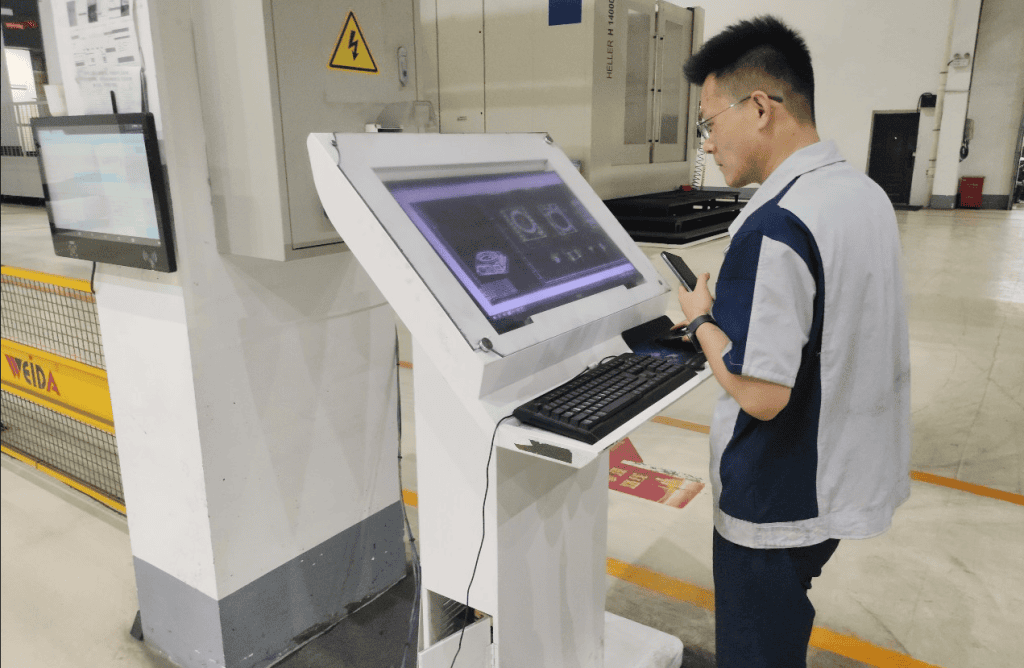
The main types of product inspection can be divided into two separate decisions:
1. When should the goods be inspected?
2. How much of the order should be inspected?
For inspection timing, the main options are:
For inspection coverage, the main options are:
A practical starting point is:
| Order Situation | Recommended Timing | Recommended Coverage |
| New supplier and newly developed product | PPI + DPI + PSI | AQL sampling with targeted 100% checks |
| Established supplier and standard repeat order | PSI | AQL sampling |
| Complex manufacturing process or unstable quality history | DPI + PSI | Stricter sampling or targeted full inspection |
| High-value, handmade or very low-tolerance product | PPI or DPI + PSI | 100% inspection of critical characteristics |
| Amazon FBA shipment | PSI | AQL plus 100% label, barcode or assortment verification |
| Full-container or fragile shipment | PSI + CLC | Sampling or full inspection based on product risk |
These combinations follow the central principle that new and unstable projects require earlier intervention, while stable repeat orders can often be managed through a final inspection and an appropriate sampling plan.
Not sure which inspection plan fits your order? Send us your product, order quantity and SKU count, factory city, and current production status. We’ll help you choose an appropriate inspection approach.
Many buyers treat “Which inspection should I book?” as one question.
It is actually two questions.
For example:
For example:
These decisions are independent.
A Pre-Shipment Inspection does not automatically mean AQL sampling. A PSI can use random sampling, 100% inspection or a customized combination.
Likewise, a During Production Inspection can focus on a sample of semi-finished units while requiring 100% verification of one critical component or process.
Understanding this distinction is one of the most important steps in building a cost-effective inspection plan.
A Pre-Production Inspection, commonly abbreviated as PPI, takes place before mass production begins.
Some inspection providers use related terms such as Initial Production Check or IPC. The precise service scope may vary, so the buyer should confirm whether the inspection will take place completely before production or during the first stage of production.
The central purpose of PPI is to confirm that the factory has the correct materials, components, instructions and production preparations before it starts manufacturing the full order.
Depending on the product, a PPI may include:
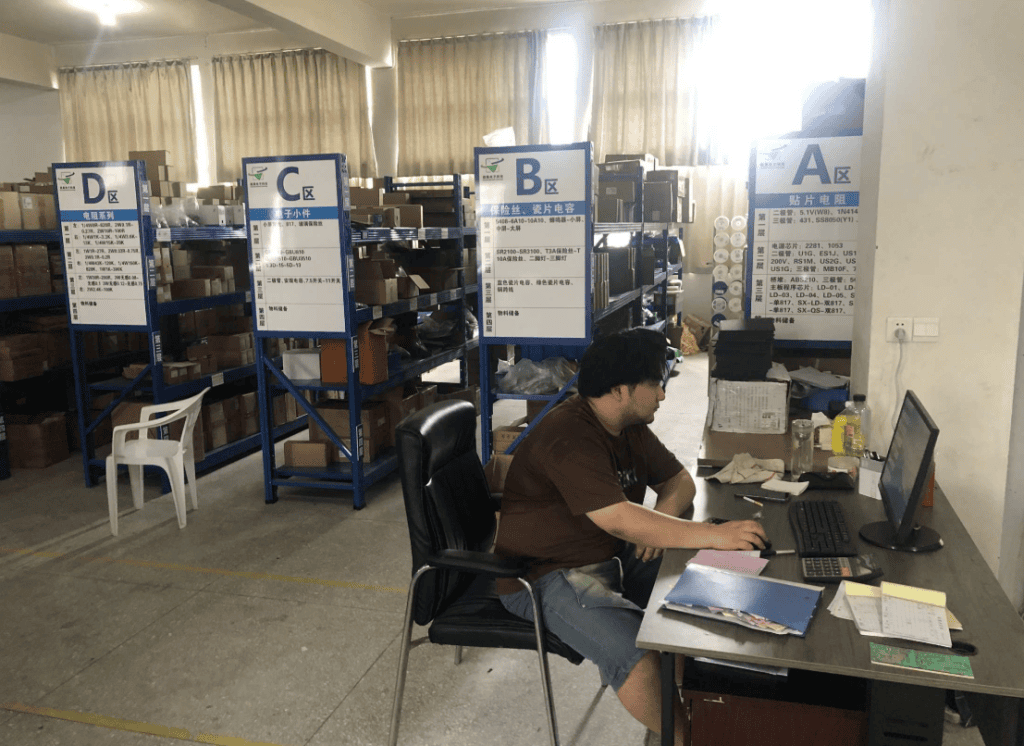
The buyer, supplier and inspection company should ideally work from the same approved reference sample and written specifications.
Verbal instructions are not enough.
Material grades, dimensions, tolerances, colors, performance requirements, packaging requirements and test methods should all be documented before the factory begins mass production.
A Pre-Production Inspection is particularly useful when:
PPI is usually the least expensive stage at which a systematic material or specification problem can be corrected.
Once the factory has cut fabric, molded components, applied plating, printed packaging or assembled the product, the available corrective options become more limited.
An Australian home-textile buyer ordered curtains and bedsheets using 250 gsm fabric.
PPI requires sufficient time between order confirmation and mass production.
It also depends on factory cooperation. The purchase order or manufacturing agreement should therefore state that the buyer or an appointed third party has the right to inspect materials and production preparations.
PPI can confirm that production is starting from the right foundation, but it cannot prove that the factory will maintain consistent workmanship throughout the full production run. That is where During Production Inspection becomes important.
The buyer originally arranged only a final inspection. By the time the goods were checked, the factory had already manufactured the order using 200 gsm fabric.
The factory eventually reproduced the goods, but the delay caused the buyer to miss an important sales window.
In another project, a French fishing-equipment brand specified a particular high-quality motor for a portable grinder. The factory planned to substitute a cheaper unbranded motor because the component would be hidden inside the finished product. The mismatch was found during material verification before mass production, allowing the correct motor to be installed before the problem spread across the full order.
Key lesson
When product performance depends heavily on a material or internal component, check that component before it becomes difficult — or impossible — to see.
A During Production Inspection, also known as DPI, DUPRO or an in-line inspection, takes place after enough units have been produced to reveal manufacturing patterns but before the entire order is complete.
A common working range is approximately 20% to 60% production completion, although the ideal timing depends on the product and process.
The objective is not merely to identify individual defective units.
It is to determine whether the production process itself is creating repeated or systematic problems.
A DPI may include:
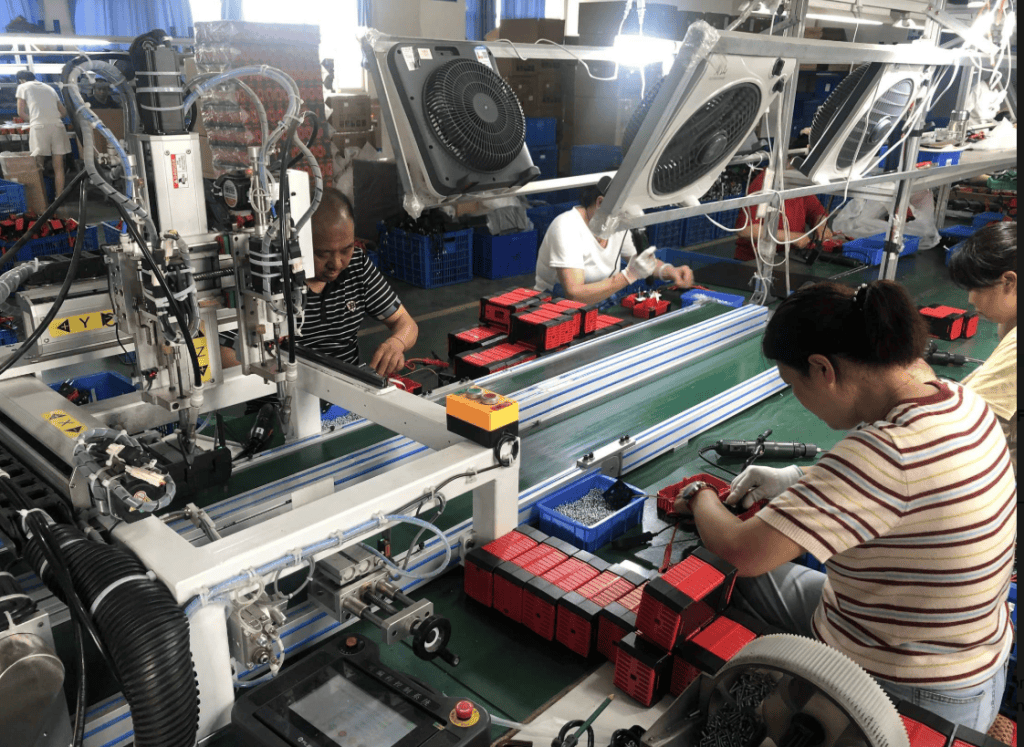
For complex products, the inspector may concentrate on processes such as:
If a repeated defect is found, the objective should be to identify its root cause, correct the process and verify the correction before production continues.
During Production Inspection is particularly useful for:
It can also help distinguish between a minor delay and a serious production problem.
A supplier may report that production is “almost finished,” while an independent visit reveals that key materials have not arrived or that only a small percentage of the order has passed a critical process.
A single DPI cannot continuously monitor every shift or production line.
Units made before the inspection may already contain defects, and problems can still appear after the inspector leaves. Some high-risk projects therefore require more than one production visit or ongoing production monitoring.
DPI is also less economical for very small orders or products with extremely short production cycles.
A UK toy brand had received repeated customer complaints, including reports of short circuits.
During an inspection of the production line and semi-finished goods, the Jonble team found that workers were soldering circuit boards without following required electrostatic-control procedures. The inspection also found that openings in the motor were not being protected during assembly, allowing screws to fall inside.
The factory was required to standardize the affected operations before production continued. Subsequent orders did not show the same recurring problems.
In a separate baseball-cap project, a logo-position error was found before final assembly. The factory only needed to remake the embroidery panels rather than disassemble or reproduce the finished caps.
Primary value of DPI
It gives the supplier time to correct the cause of a defect instead of sorting damaged products after the entire order has been completed.
A Pre-Shipment Inspection, or PSI, is the most widely used form of third-party product inspection.
It is performed after the order is substantially complete and the goods are packed or ready for final packing, but before the shipment is released.
The inspector should be checking actual mass-production units from the shipment – not separately prepared samples.
A customized PSI checklist may cover:
The inspection findings are documented in a report containing measurements, test results, defect classifications and photographs.
The buyer then uses the findings to decide whether to:
PSI is appropriate for nearly every product category.
For a stable supplier producing a repeat order of a standardized product, a PSI using AQL sampling may provide a practical balance between cost and risk.
For a high-value or highly variable product, the same PSI stage may instead use 100% inspection.
A final inspection can identify what is wrong with the completed shipment, but it may be too late to correct the problem without affecting the shipping schedule.
If the factory has used the wrong material across the full order, followed an incorrect drawing or created a repeated production defect, a PSI may reveal the issue only after all related costs have already been incurred.
PSI should therefore be treated as a final verification point – not as a replacement for earlier process control when the order carries higher risks.
An Amazon seller in the United States sold massage brushes.
In one production batch, the factory attached labels intended for bath sponges to the brush packaging. The error led to returns, negative customer feedback and a severe decline in daily sales. The goods then had to be removed from the FBA system and relabeled, adding logistics, labor and lost-sales costs.
After Jonble began handling the seller’s pre-shipment inspections, the same category of labeling error did not recur.
This case illustrates why a PSI must examine more than product appearance.
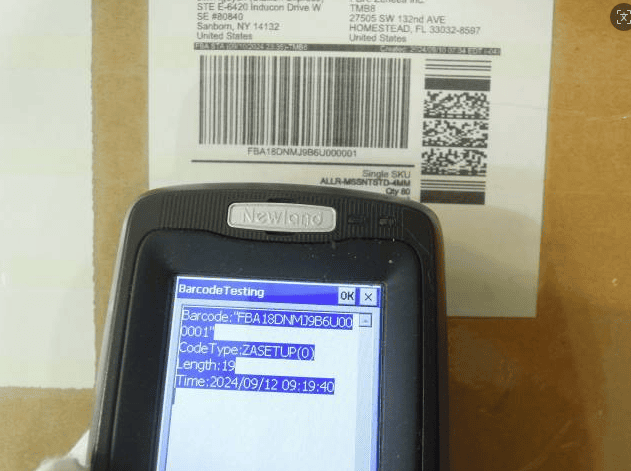
For ecommerce orders, the barcode, product identity, variation, warning label, carton assortment and FBA information may be just as commercially important as the physical product.
A Container Loading Check, also called CLC, Container Loading Inspection or Container Loading Supervision, takes place while the goods are being loaded.
Its purpose is to confirm that the correct cargo is loaded in the correct quantity and handled in a way that reduces transportation risk.
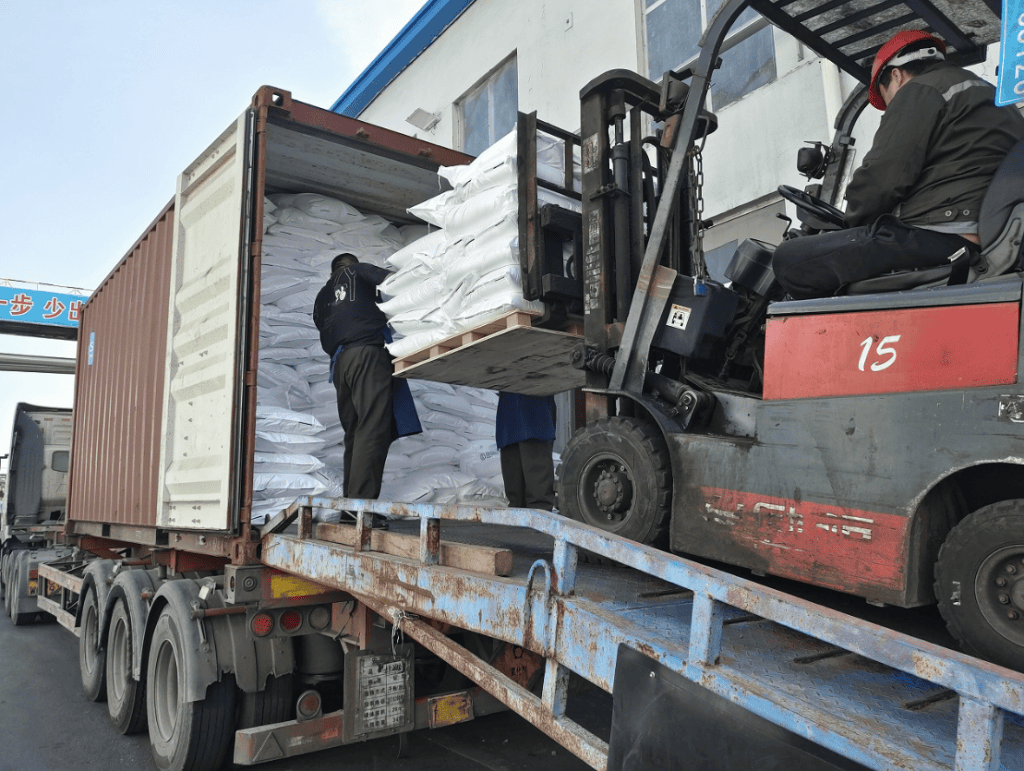
A CLC may include:
Container loading supervision is useful for:
No.
A Container Loading Check mainly addresses loading, quantity, packaging condition and transportation risks.
It normally does not provide the time or access required for a comprehensive evaluation of product workmanship, dimensions and function.
CLC should therefore complement a PSI, not replace it.
While supervising the loading of aluminum components for a shipment to Spain, a Jonble inspector found a small hole in the roof of the container.
The damage was not immediately obvious, but it created a significant risk of water entering the container during sea transportation.
The loading process was paused, and the freight forwarder replaced the damaged container before the shipment continued.
Once the container is sealed and transported to port, correcting such a problem becomes far more complicated.
After deciding when to inspect, the buyer must decide how many units to inspect.
The two main approaches are:
Neither is universally better.
They solve different problems.
AQL formally stands for Acceptance Quality Limit, although the phrase “Acceptable Quality Level” is still commonly used in the market.
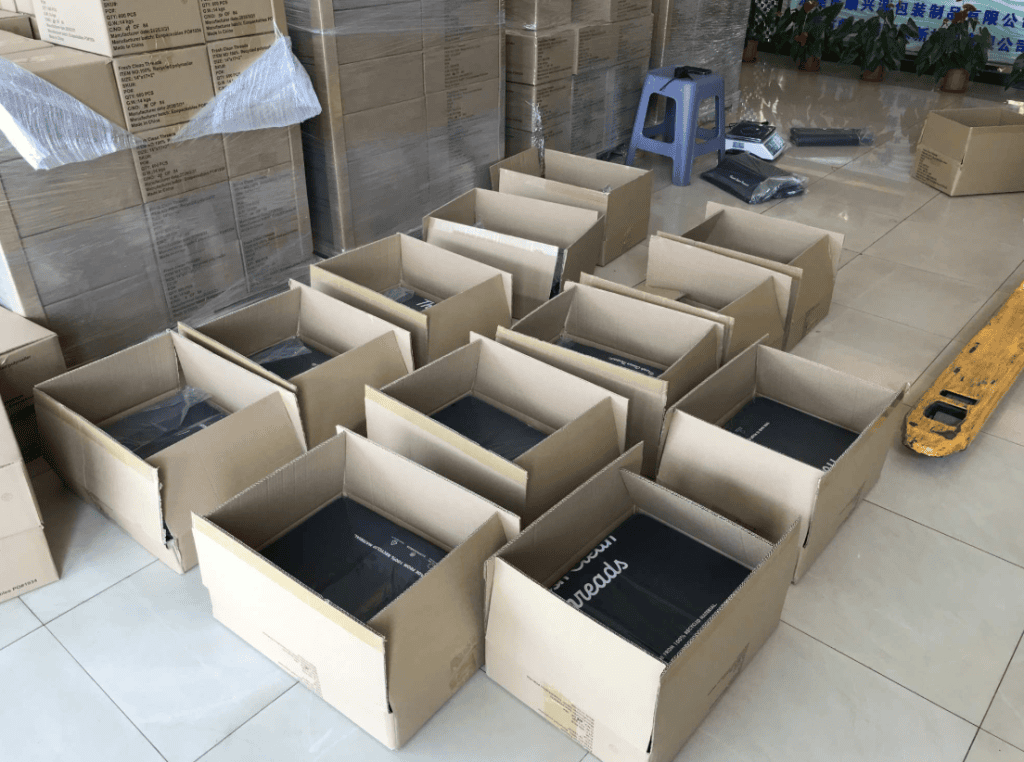
Under an AQL plan, the inspector randomly selects a calculated number of units from the production lot. The sample is inspected, defects are classified, and the result is compared with predetermined acceptance and rejection numbers.
For inspection by attributes, recognized frameworks include ISO 2859-1 and ANSI/ASQ Z1.4. ISO published a new ISO 2859-1 edition in 2026, while ASQ currently lists ANSI/ASQ Z1.4-2003 (R2018) as its current edition.
A typical AQL process involves:
1. defining the production lot;
2. choosing an inspection level;
3. determining the required sample size;
4. defining critical, major and minor defects;
5. setting the relevant AQL limits;
6. randomly selecting units;
7. and comparing the observed defect numbers with the acceptance and rejection criteria.
An AQL value is part of an acceptance-sampling decision system.
It should not be interpreted as a guarantee that the full order contains exactly the same percentage of defective units as the selected AQL number.
The result is a statistical decision about whether the lot meets the agreed acceptance criteria based on the sample inspected.
There is always residual sampling risk.
A rare defect may exist outside the sample, and a lot that passes sampling is not automatically defect-free.
AQL sampling is usually suitable for:
For example, large orders of molded plastic products often show systematic issues such as flash, color inconsistency or dimensional deviation. These repeated problems can often be detected through properly selected samples.
For bulky products such as furniture, building materials, pumps, power tools and generators, checking every unit may be operationally unrealistic. Jonble has therefore used AQL sampling for orders containing thousands of large electrical tools.
In a 100% inspection, every unit in the defined lot enters the agreed inspection process.
This does not necessarily mean that every possible product characteristic is tested exhaustively.
The inspection company and buyer must still define:
For example, every piece may receive a visual and functional check, while destructive testing is conducted only on a smaller sample.
Full inspection is commonly considered when:
Examples include:
No responsible inspection plan should be presented as an absolute guarantee.
A full inspection provides much broader coverage than random sampling because every unit is checked against the agreed criteria. However, the result still depends on:
The correct description is that 100% inspection reduces the risk of individual defects escaping the agreed checks. It is not a promise of mathematical perfection.
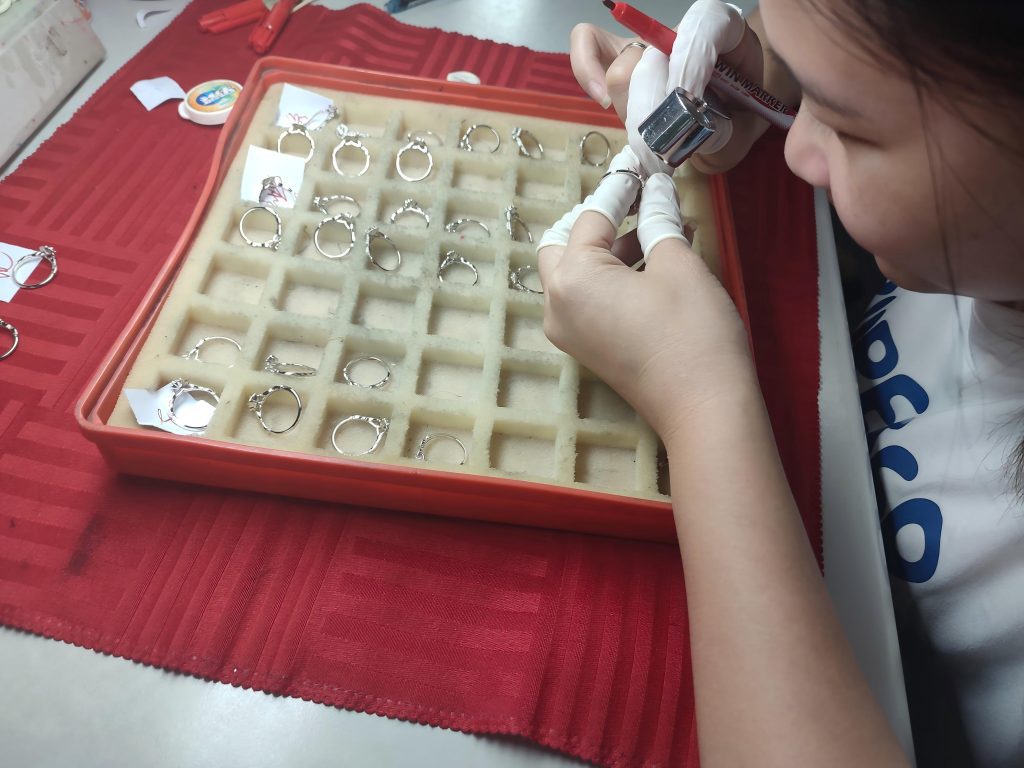
During the inspection of a ring order, Jonble found that labels had been reversed on 20 pairs of products: one-carat and half-carat items had been incorrectly identified.
A random sample might not have included all affected units.
Because individual product identity and value were involved, unit-by-unit label verification provided much stronger protection for the buyer.
In another full-inspection project involving 2,000 stainless-steel waste bins, the buyer required every unit to be free from scratches and welding marks and to stand without rocking. Only approximately 1,500 units met all of the buyer’s requirements.
| Factor | AQL Sampling | 100% Inspection |
| Units inspected | A statistically selected sample | Every unit within the agreed lot |
| Main purpose | Decide whether the lot meets acceptance criteria | Check each unit against defined criteria |
| Cost relationship | Less directly affected by total lot size | Generally increases with quantity |
| Time required | Usually shorter | Usually longer |
| Residual risk | Unchecked units remain | Lower risk of unit-level defects escaping agreed checks |
| Best suited to | Large, standardized and stable production | High-value, variable, handmade or low-tolerance products |
| Typical examples | Household goods, plastic products, accessories, tools | Jewelry, premium gifts, individual labels, precision products |
| Main limitation | Low-frequency defects may not appear in the sample | Higher labor cost and longer lead time |
AQL and 100% inspection do not have to be mutually exclusive.
Many of the most practical inspection plans use different coverage levels for different risks.
For example:
This allows the inspection budget to be concentrated on the characteristics most likely to create serious commercial consequences.
An FBA product might use:
A small cosmetic defect and an incorrect FNSKU label do not create the same type of risk.
They therefore do not always deserve the same inspection coverage.
A jewelry order might use:
Jonble’s source material also distinguishes between stricter sampling plans for some fashion-jewelry orders and more extensive full inspection for higher-value silver and gold jewelry, particularly for appearance, packaging and clasp function.
Budget principle
Do not spend the same amount of inspection time on every characteristic. Spend more on the defects that would cost your business the most.
A useful decision can usually be reached by answering five questions.
A supplier producing its tenth repeat order does not carry the same risk as a factory manufacturing your design for the first time.
New suppliers and newly developed products generally justify earlier inspection.
An established supplier may still require PSI because materials, workers, equipment and subcontractors can change between orders.
Consider where the highest-risk mistake is likely to occur.
If the risk is an incorrect material, inspect before production.
If the risk is an unstable manufacturing process, inspect during production.
If the risk concerns final workmanship, quantity, packaging or labeling, inspect before shipment.
If the risk concerns cargo handling or container condition, supervise loading.
Systematic defects affect many units in the same way.
Examples include:
These risks are often well suited to PPI or DPI.
Unit-specific defects vary from piece to piece.
Examples include:
These risks may require stricter sampling or 100% inspection.
Do not compare inspection cost only with the factory price of the product.
Also consider:
A five-dollar product can create a much larger loss if correcting it requires removing inventory from a fulfillment center.
Inspection must be scheduled early enough for the factory to respond.
An inspection performed the day before container loading may provide information, but it may not leave enough time for sorting, rework or reinspection.
The inspection date should be part of the production plan, not added only after the supplier announces that the goods are ready.
An inspector cannot reliably decide whether a product is “good” based on a general instruction such as:
An instruction that is too vague
“Please check the quality carefully.”
The inspector needs an objective basis for comparison.
Before inspection, the buyer should provide:
The buyer should also define what happens after the inspection.
For example:
The central quality-control principle is to define acceptance before production – not after a dispute begins. The original Jonble framework emphasizes making requirements written, measurable and agreed at the sampling stage, then connecting material control, production inspection and final verification into one closed process.
An on-site product inspection can verify many agreed characteristics, including:
However, an inspection does not automatically replace accredited laboratory testing, certification or formal regulatory assessment.
Some safety, chemical, electrical and material requirements require specialized equipment and controlled laboratory procedures.
The inspection plan should therefore identify:
1. what will be verified at the factory;
2. what must be tested by a laboratory;
3. and which documents must correspond to the actual production batch.
Jonble already has separate content explaining the difference between product inspection and product testing, so this section should link to that supporting article rather than trying to cover the entire compliance subject here.
The cheapest inspection plan is not necessarily the one with the lowest inspection fee.
It is the plan that identifies the most expensive risks while they can still be corrected.
For a new supplier, that may mean checking materials before production.
For a complex product, it may mean inspecting the process before defects spread across the full order.
For a stable repeat order, it may mean a Pre-Shipment Inspection using AQL sampling.
For jewelry, premium goods or high-risk labels, it may mean checking every unit or every critical characteristic.
For containerized cargo, it may mean adding loading supervision after the product inspection has been completed.
The best quality-control strategy is rarely one isolated inspection.
The core decision
It is a combination of the right timing, the right coverage and a clear written standard.
The four main inspection stages are Pre-Production Inspection, During Production Inspection, Pre-Shipment Inspection and Container Loading Check. PPI checks materials and readiness, DPI checks the manufacturing process, PSI checks finished goods before release, and CLC verifies cargo and loading conditions.
A first order usually benefits from PPI, DPI and PSI. PPI verifies materials and production preparation, DPI identifies process problems while correction is still possible, and PSI confirms the condition of the final shipment. The exact combination should reflect product complexity and order value.
For a repeat order from a stable supplier, PSI may be sufficient when combined with an appropriate sampling plan. For a new product, unstable supplier, high-risk material or complex production process, relying only on PSI may identify serious problems too late for economical correction.
AQL inspection checks a statistically selected sample and uses the result to make an acceptance decision about the lot. A 100% inspection puts every unit through the agreed checks. AQL is generally more efficient for large standardized orders, while full inspection provides stronger unit-level coverage at a higher cost.
No. A CLC verifies container condition, quantities, shipping marks, carton condition and loading practices. It does not normally provide a complete assessment of product workmanship, dimensions or function. It should usually be performed after a PSI, not instead of one.
The report should identify the defect types, affected samples and supporting evidence. The buyer may ask the supplier to sort, repair or reproduce the affected goods and then arrange a reinspection. The shipment decision remains with the buyer unless the contract defines a different procedure.
No. An inspection report records what was checked, the sampling method used, the findings and the result against agreed criteria. Sampling inspections carry statistical risk, and even full inspection is limited to the agreed scope and methods. The report supports an informed shipment decision rather than providing an absolute guarantee.
A structured third-party report can provide a useful factual record of the inspection date, sample size, tests, defects and photographic findings. Its contractual or legal significance depends on the purchase agreement and applicable jurisdiction, so the inspection criteria and shipment conditions should be written into the order documentation in advance.
Send Jonble the following four details:
1. Your product and its key specifications
2. Order quantity and number of SKUs
3. Factory city and whether the supplier is new or established
4. Current production status and planned shipment date
Jonble can help you choose the right combination
Our team will help you determine whether your order needs PPI, DPI, PSI, CLC, AQL sampling, 100% inspection, or a customized combination.
Email: service@jonble.com
If you have any questions or are looking for further details regarding our quality control services and inspection services in China, leave us a message. We will respond at the earliest.