

Factory Audit Vs Product Inspection: Which Protects You Better?
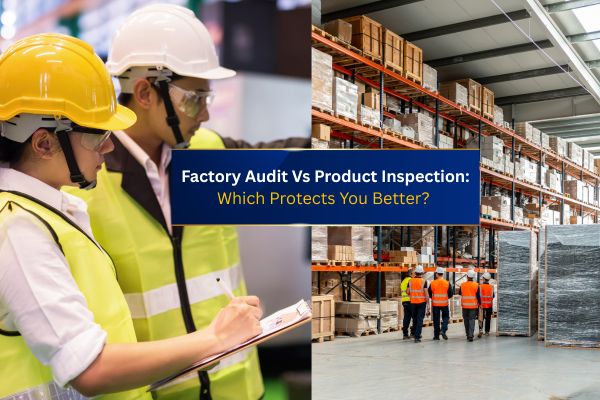
When importing products from China, two terms often come up: factory audit and product inspection. Many buyers assume these mean the same thing, but they serve two different purposes. Understanding this difference can help you avoid costly mistakes and choose the right service at the right time. Skipping one of these checks can leave gaps in how well your business is protected. Some buyers rely on product inspection and never verify who they are actually working with. Others check a supplier once and assume every future order will be fine. This blog explains what each service covers, how they differ, and how using both can give your business stronger protection. What Does a Factory Audit Cover? A factory audit is a detailed check on the supplier itself, not on the products they make. Its purpose is to confirm whether a factory is legally registered, financially stable, and genuinely capable of handling your order. In simple terms, it helps you know who you are doing business with before you commit any money. A standard China factory audit usually looks at: An audit answers one basic question: Will this factory really be able to deliver what it says it can? Many suppliers look good online, but they are small workshops or trading companies with no real production facility. A factory audit helps you spot this early, before placing a large order. What Does Product Inspection Cover? Product inspection works differently from a factory audit. It is not concerned with the factory’s reputation, history, or overall size. Instead, it focuses entirely on the specific batch of goods being reviewed at that particular time. This makes it a more immediate check, focused on what is actually ready to ship. There are a few points where this makes sense to do: Catching a defect during production is a small fix. Catching the same defect after the container has already sailed is a much bigger, more expensive problem, sometimes an impossible one to fix at all. Also read: What are the Advantages of Outsourcing Product Inspection Services? Factory Audit Vs Product Inspection: Quick Comparison Here is a quick comparison between factory audit and production inspection on different parameters: Point of Comparison Factory Audit Product Inspection What it checks The supplier’s legal status, capacity, and reliability The actual goods in a specific order When it’s used Before starting work with a new supplier At key stages of production and before shipment Main purpose Confirms if the factory can be trusted long-term Confirms if this batch of goods meets your standards Frequency Usually done once, or occasionally for large contracts Done for every order, at one or more stages Risk it prevents Working with fake, unregistered, or incapable suppliers Receiving defective or incorrect goods Best suited for New supplier relationships Ongoing orders, even with trusted suppliers What’s the Real Difference? Here’s the easiest way to think about it. A factory audit tells you whether you can trust the supplier long-term. Product inspection tells you whether this particular order is good enough to ship. A factory can pass an audit with no issues and still send out a bad batch later because a machine broke down, a new employee made an error, or they rushed to hit a deadline. On the flip side, one clean inspection report does not mean the factory has the resources or stability to handle your next five orders. That’s the gap most buyers miss. One check does not cover what the other one covers. When Do You Actually Need Each One? If this is a brand new supplier you have never worked with, start with an audit. It is the smarter move before committing real money, especially for larger orders. Once you know the supplier is legitimate and capable, product inspection becomes the thing you do on every single order after that, since even good factories slip up sometimes. For suppliers you have worked with for years and trust already, you might not need an audit every time. Regular inspections at key production stages usually cover you well enough, with maybe an audit refresh if the order size grows significantly. How Jonble Supports Factory Audits and Product Inspection Jonble has been providing factory audits and product inspection services for over 20 years, based in China, and has supported more than 1000 clients across the country’s major manufacturing regions, including Zhejiang, Shanghai, Jiangsu, Guangdong, Ningbo, and Shenzhen. On the factory audit side, Jonble sends someone on-site to look at a supplier’s legal standing, production capacity, machinery, quality control processes, and R&D setup. The findings get measured against ISO9000 quality standards, so you are not just getting someone’s opinion; you are getting something you can actually compare against a recognized benchmark. Product Check Services Covered by Jonble What Makes Them Different Jonble also offers a sample picking service, allowing buyers to review actual production samples before approving the full run. By combining audit services with a full range of inspection options, Jonble covers both sides of the sourcing process, something not every inspection company in China offers. Response times are quick as well. Jonble typically replies within 24 hours of an inquiry, schedules the inspection within about a week, and delivers a report within 24 hours of the visit. In many cases, an inspector can reach the factory within 48 hours. Summary Neither service replaces the other, nor is that really the point. A factory audit protects you from partnering with the wrong company. Product inspection protects you from receiving the wrong goods. If you only pick one, you are leaving a gap somewhere. For anyone serious about sourcing from China without the usual problems, pairing both services is the safer route. Run an audit before you commit to a supplier, then keep inspecting each subsequent order. If you want to talk through what your specific order needs, Jonble’s team is reachable anytime and can walk you through a sample report before you decide anything.
What is Pre-Shipment Inspection and When Do You Actually Need One?
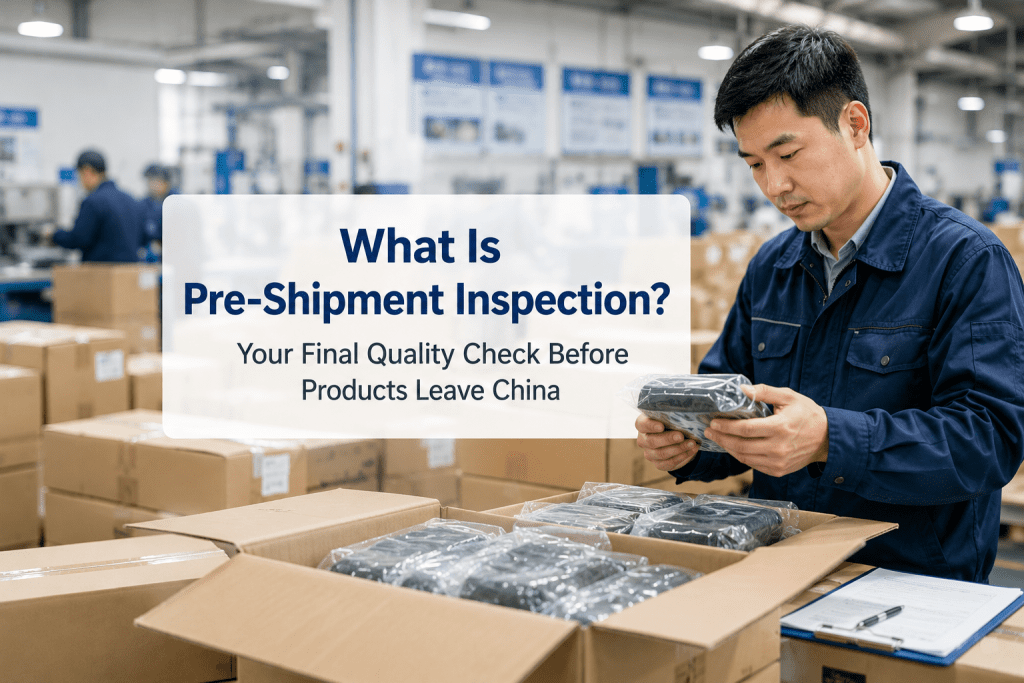
Importing products from China involves multiple moving parts, and quality control is one of the most critical. Many businesses place orders with overseas factories, wait weeks for production to complete, and receive shipments that do not match their original specifications. Wrong colors, broken units, and incorrect labeling, these are problems that are difficult and expensive to fix once goods have already shipped. A Pre-shipment Inspection is a practical solution that helps importers catch these issues before products leave the factory. What is a Pre-Shipment Inspection? A pre-shipment (PSI) is a quality check done at the factory or warehouse before your products are loaded into a container and sent to port. It is also called a Final Random Inspection, or FRI, because it is typically the last check that happens before goods ship out. The timing matters. PSI is carried out when at least 80% of your order is finished and packed. That way, inspectors are checking actual production units from your batch, not a handful of special samples the factory prepared for show. Most professional inspection companies follow the ANSI/ASQC Z1.4 (ISO 2859-1) standard for sampling. This means a calculated number of random units are pulled from your order and tested against your exact specifications. To put things in perspective, defective products and poor quality cost businesses billions every year in recalls, returns, and lost customers. A single inspection is a fraction of that cost. Also Read This: Pre-Shipment Inspection – 7 Key Steps of the Procedure What Gets Checked During a PSI? A good Pre-shipment Inspection is not just someone walking through a warehouse and nodding. It is a structured, checklist-based process that includes: At the end, you receive a comprehensive report with findings, defect classifications, and a recommendation on whether the shipment passes or requires corrective work before leaving the factory. When Should You Actually Book One? Not every order carries the same level of risk. But in certain situations, skipping a PSI is a decision you are likely to regret. Book a Pre-shipment inspection when: Studies show roughly 40% of product defects go undetected without a third-party quality check. That number alone makes a strong case for independent inspection. About Jonble: Quality Control You Can Count On Jonble is a product inspection and quality control company based in Hangzhou, Zhejiang, China. They have been working with foreign importers for over 20 years, helping businesses protect their orders before goods ever leave the factory. What Jonble Offers Product Categories Covered Also, beyond Pre-shipment inspection, Jonble provides Initial Production Inspection, During Production Inspection, Full Inspection, Container Loading Inspection, Factory Audits, and Sample Picking. Whether you want a single one-time check or ongoing quality control across your supply chain, they take care of it all from one place. FAQs (Frequently Asked Questions) 1.What is the difference between a PSI and a during-production inspection? A during-production inspection (DUPRO) kind of happens while manufacturing is still going on, so you can catch and fix issues way earlier than later. A Pre-Shipment inspection (PSI) happens close to the end, when most of the order is already packed up. Both are helpful, but PSI becomes your real last chance to approve or reject a shipment before it actually ships. 2.How many products get inspected during a PSI? Not every single unit. Inspectors randomly pull a sample, using the AQL sampling method under ANSI/ASQC Z1.4. The exact number you end up checking depends on your total order quantity, plus the AQL level you choose. 3.Can a PSI be done for any kind of product? Yes, Pre-Shipment Inspections are carried out across a pretty wide set of categories like garments, electronics, toys, furniture, housewares, jewelry, and more, so it is not only one specific item type. The inspection checklists are adjusted to match each product, instead of being the same everywhere. 4.How fast do I get the report? The time for reports depends on the company, product type, and more. With Jonble, the detailed inspection report lands in your inbox within 24 hours of the inspection. 5.Is a pre-shipment inspection worth the cost? For most importers, without question. The cost of one inspection is far less than handling a defective shipment, processing returns, dealing with customs issues, or managing complaints from customers. It protects your investment before the risk becomes a problem. Final Words If you source products from China, a Pre-shipment Inspection is one of the most practical steps you can take to protect your order. It gives you real data, not assumptions, before you commit to releasing payment and accepting a shipment. Jonble makes that process straightforward, with fast scheduling, experienced inspectors, detailed reports, and coverage across all of China. Visit jonble.com to learn more or get a quote from their team.